D'ARK
A two-sided digital business card platform for UK small businesses. The business keeps its own card design and gets a real CRM; the person who receives the card gets an app, not a dead-end web page.

LANDING PAGE — THE CARD KEEPS THE BUSINESS'S OWN DESIGN, NOT A TEMPLATE
The problem was never the card. It was the follow-through the card was supposed to enable.
Three years of UK conferences and trade shows, and the same thing every time: cards exchanged freely, no reliable way to remember who gave you what, and no follow-up. It wasn't only professional — during a renovation at home I was handed cards by a plumber and a contractor I genuinely wanted to rehire, and lost both.
Desk research says the category is broken. It doesn't say who feels it.
So I ran my own primary survey of UK business owners and founders — 21 responses so far, closely matching the target profile: solo operators and 2–10 employee businesses across professional services, property, tech and sales.
The finding that changed the product
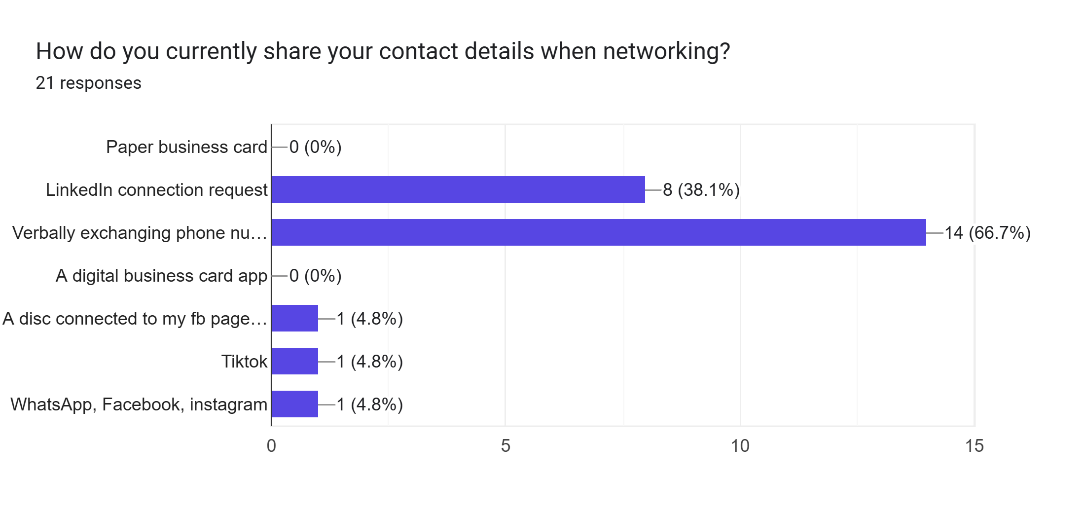
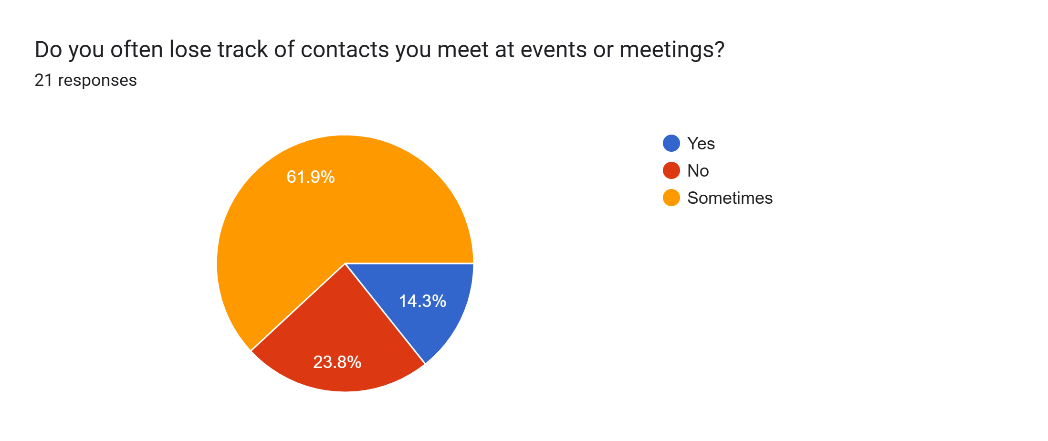
85.7% network with new contacts at least occasionally each month, but 66.7% exchange a phone number verbally and 38.1% send a LinkedIn request. Not one respondent named a paper card or a digital card app as their primary method. D'ARK doesn't compete with V1CE or HiHello — it competes with doing nothing structured at all.
The persona I designed around
A solo mortgage broker who networks 15+ times a month at referral events, exchanges numbers verbally or over LinkedIn, loses track of who he promised a follow-up to, and has never used a digital card app. Realistic rather than enthusiastic about paying: 47.4% of respondents would pay £5 per seat outright, 42.1% said maybe.
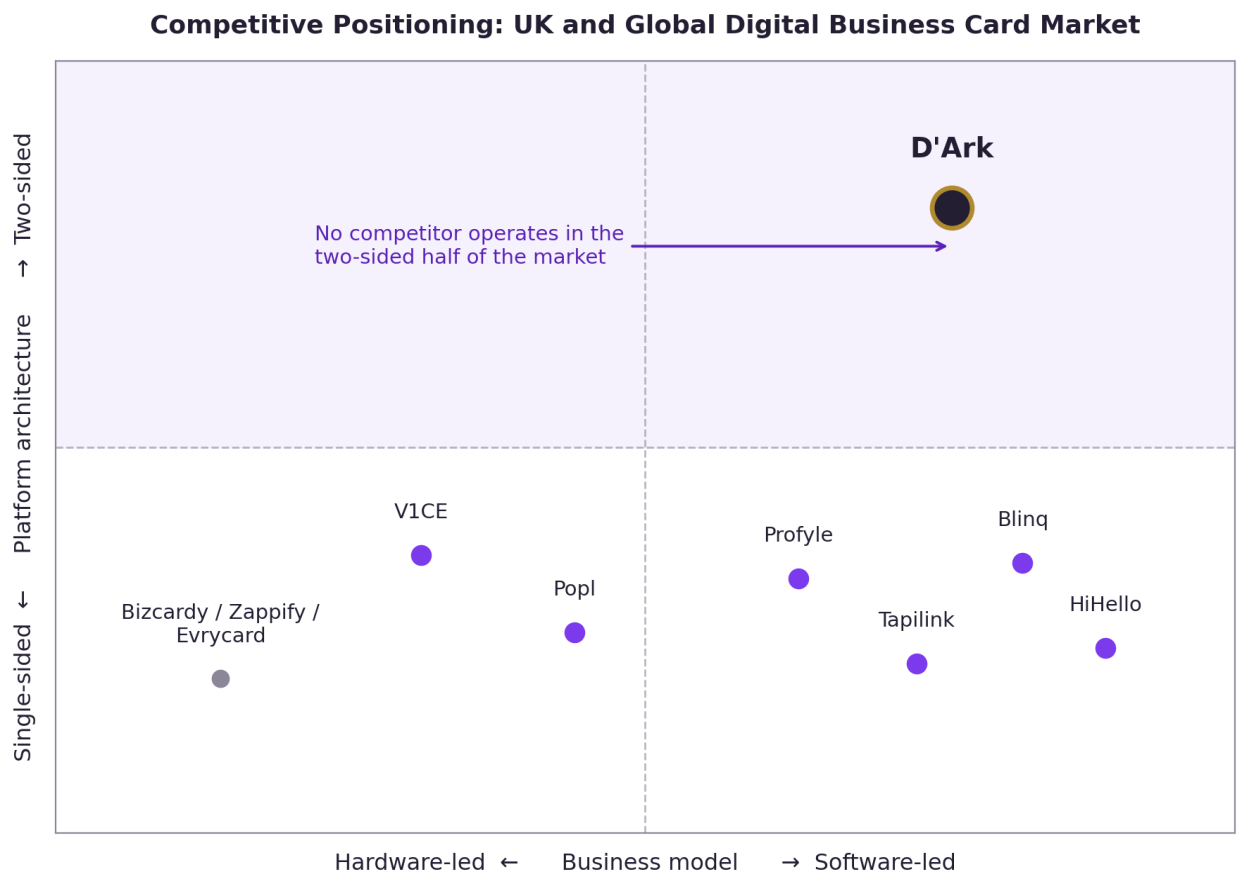
V1CE is the strongest UK player — 500,000+ users, a genuine CRM — but it's priced for individual consultants at £49.99 per user per month and is sender-only. Profyle undercuts on price and stops at event analytics. HiHello has the best free tier but is enterprise-first. Blinq is fastest to set up with almost no follow-up workflow. All of them treat the exchange as the end of the interaction.
Digitise the relationship, not just the card.
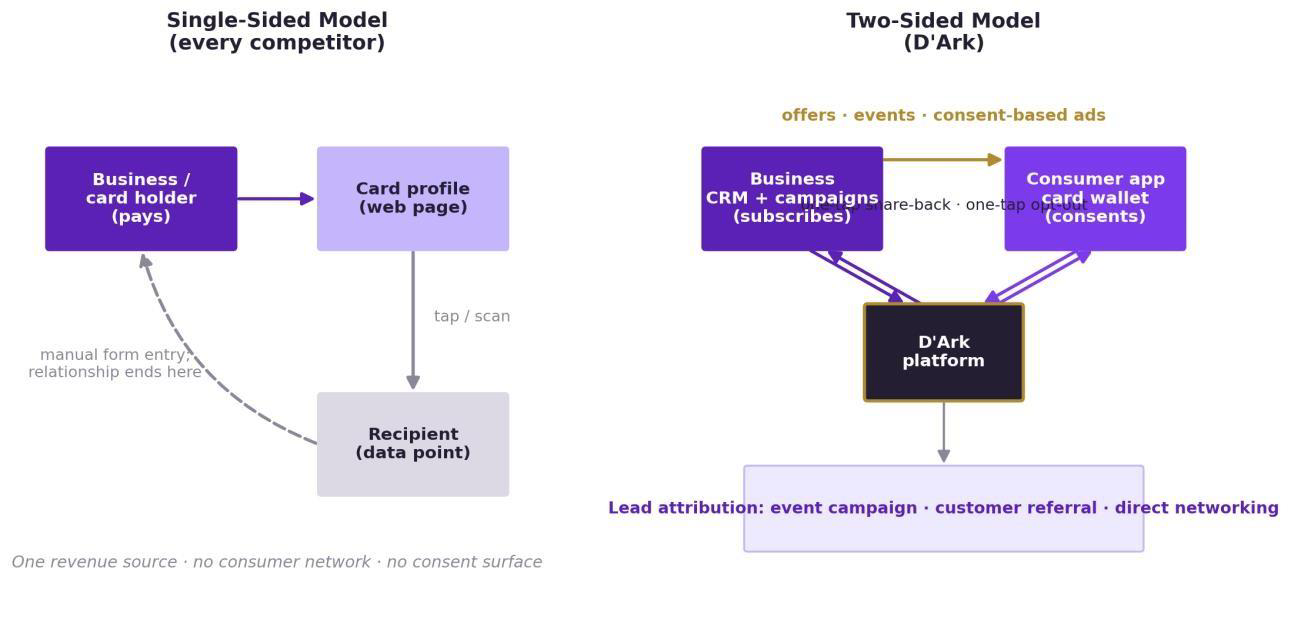
Four calls that define the product.
Two-sided, not sender-only
Upload your card, don't rebuild it
One-tap opt-out, in the app
Ad rules before ad revenue
High-fidelity across web and mobile, now in build.
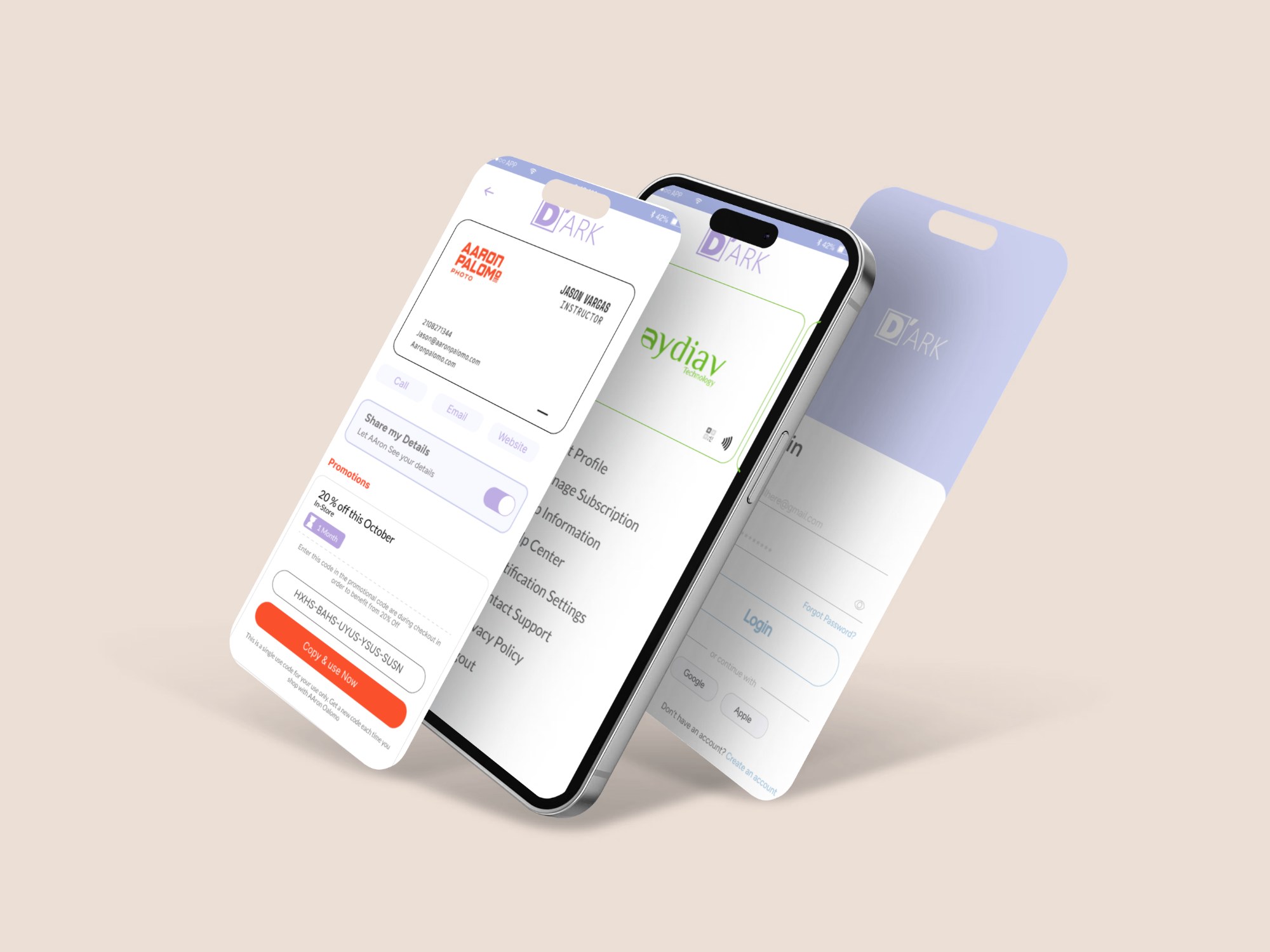
CARD WALLET, CARD DETAIL WITH PROMOTIONS, AND ACCOUNT SCREENS
Outcome
Pre-revenue and pre-incorporation, design phase complete and frontend development underway. A working mobile prototype is live in Figma; the landing page, pricing and dashboard screens are ready for the Year 1 build.
My role
Sole founder and designer. I ran the primary research and competitor analysis, designed the full product across web and mobile, and am building the frontend while briefing a small remote team on backend and mobile development.
Reflection
I assumed my competition was the other card apps; the survey said otherwise. That changes how the product sells itself — "stop losing contacts," not "better than V1CE." And 21 LinkedIn-sourced responses point a direction; they don't prove fit. Widening that sample comes before I let early enthusiasm harden into assumptions.